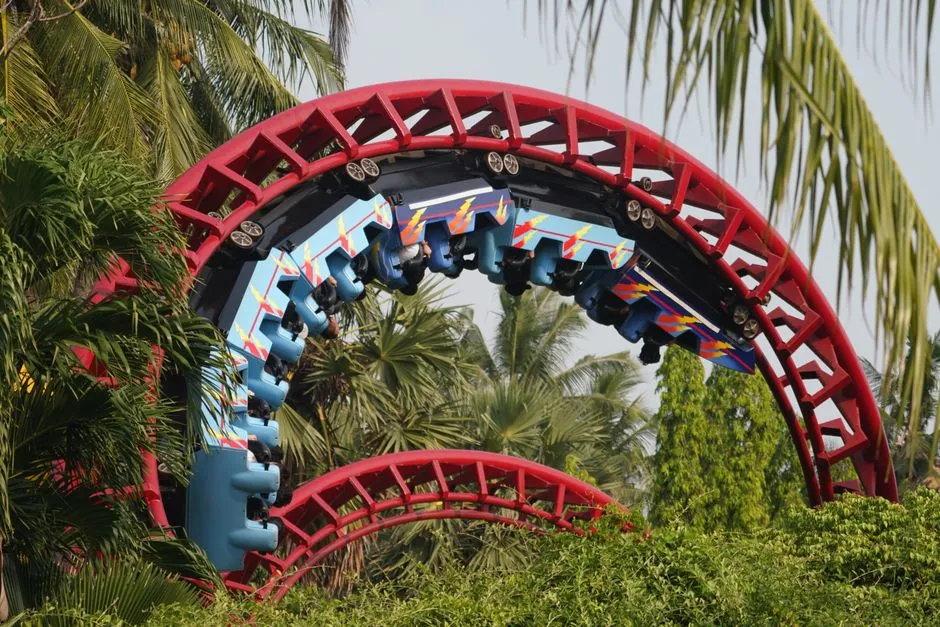
Roller coasters are among the most heavily engineered consumer products in the world. Every operating coaster at a major U.S. theme park is designed to international amusement-ride safety standards, inspected daily by the operator, audited regularly by state regulators and manufactured to tolerances that most consumer industries would consider absurd. The headline statistics on coaster injury are, by any reasonable measure, remarkably low.
The forces a rider experiences on a typical coaster are well within the range the human body handles every day in normal activity. Sustained vertical Gs on a coaster typically peak between 3.5 and 4.5 — comparable to the launch profile of a fighter jet at the low end and far below the sustained loads tolerated by trained pilots and astronauts at the high end. The difference is that coaster forces are brief, repeating across short windows of one to three seconds rather than continuous loads.
Lateral and negative Gs do more of the work in shaping how a coaster feels. Negative Gs (airtime) are produced when the train accelerates downward faster than gravity, lifting riders off their seats and into their restraints. Modern lap-bar designs distribute that load across the thighs and waist rather than the chest, which is why the airtime moments on a hyper coaster feel like floating rather than being thrown.
Potential medical issues to take seriously are mostly cardiovascular and orthopaedic. Riders with high blood pressure, recent surgery, neck or back injury, or certain heart conditions should consult a doctor before riding aggressive coasters. Modern parks publish ride health warnings clearly at every queue entrance — read them, and take them seriously rather than as legal boilerplate.
Motion sickness affects riders differently. Coasters with sustained inversions and rolls can trigger sickness even in riders who handle drops and laterals comfortably. Eating lightly, hydrating well and avoiding closed-eye riding usually resolves the problem. If a particular layout still triggers sickness consistently, it is fine to skip — the rest of the lineup will more than compensate.
The practical takeaway is to ride with confidence. Modern coasters are not a category of activity that requires bravery so much as appropriate self-knowledge. Choose your rides, respect the warnings, follow the operating crew's instructions and let yourself enjoy the experience.