Coaster types.
Steel, wood, hybrid, launched, inverted, hyper, family — every category in the Coaster Index database with full counts and links through to the lineup.
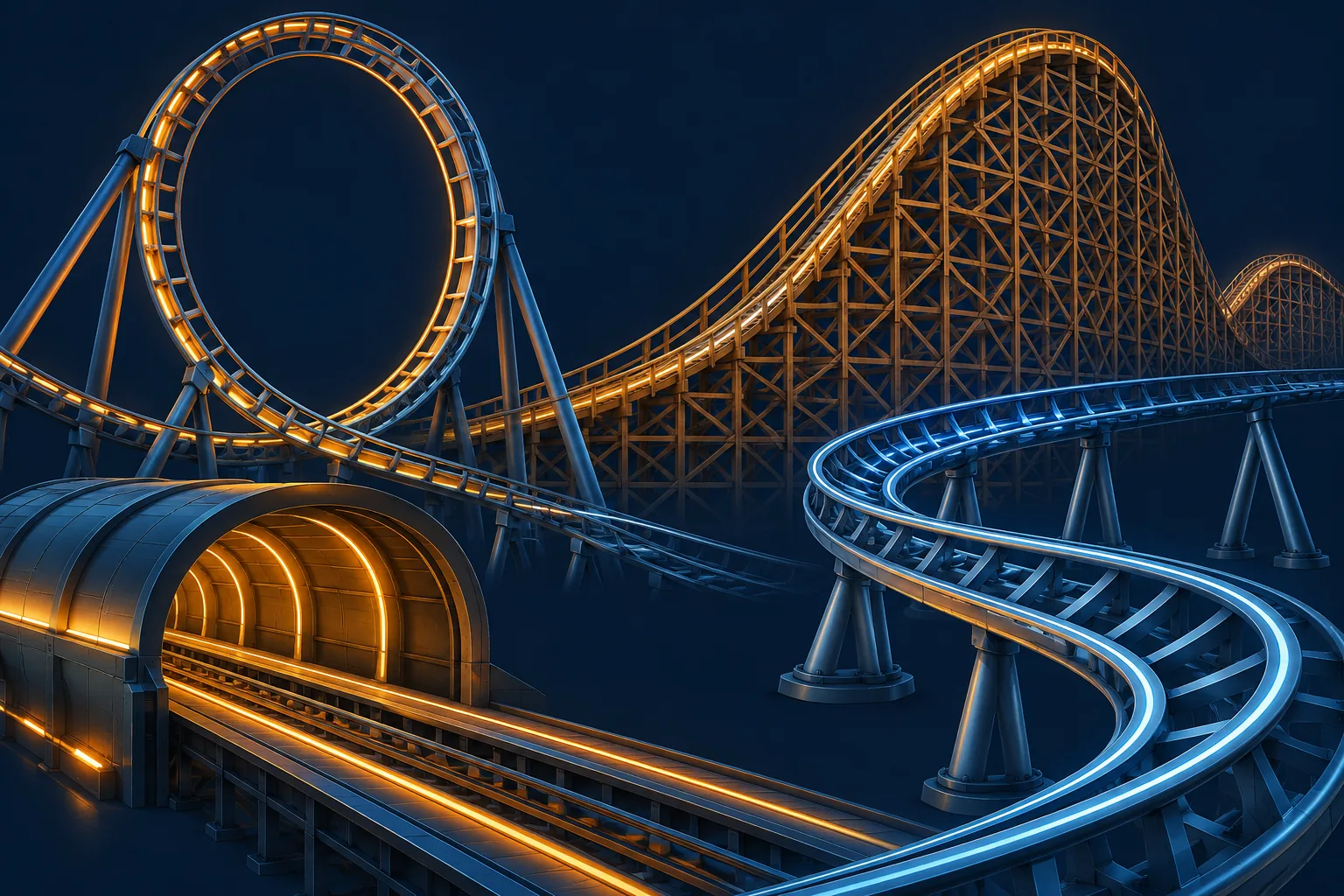
Steel Roller Coasters
Steel-tracked coasters dominate modern construction with smooth transitions, inversions and high-throughput trains.
Wooden Roller Coasters
Traditional wooden coasters built on timber support structures, delivering laterals, airtime and unmistakable rumble.
Hybrid Roller Coasters
Steel rails on a wooden support frame — the format pioneered by RMC that has reshaped the modern thrill landscape.
Launched Roller Coasters
No traditional lift hill — these coasters use linear induction, hydraulic or magnetic launches to hit top speed in seconds.
Inverted Roller Coasters
Riders hang below the track with feet dangling, exposed to inversions and head-chopper sensations.
Hyper Coasters (200ft+)
Coasters with first drops 200 feet or higher — the hyper class that defines the country's headline thrill rides.
Family Roller Coasters
Family-friendly coasters under 70 feet with no inversions — the best entry points for first-time riders.
Looping Coasters
Three or more inversions — corkscrews, loops, zero-G rolls stitched into a single layout.
Why categorize coasters?
The category vocabulary used across modern theme parks — steel, wood, hybrid, launched, inverted, hyper, family — does real work. Each label points to a specific combination of structure, train design, restraint hardware and the kind of forces a rider will experience. Reading a coaster's category is the fastest way to predict whether it will suit you before joining a queue.
Coaster Index groups every tracked coaster into the categories above based on its underlying record. Use these pages to browse a category in full, see which manufacturers dominate it and which parks have the best examples in the country. Each entry links through to the full coaster page with the complete spec sheet.