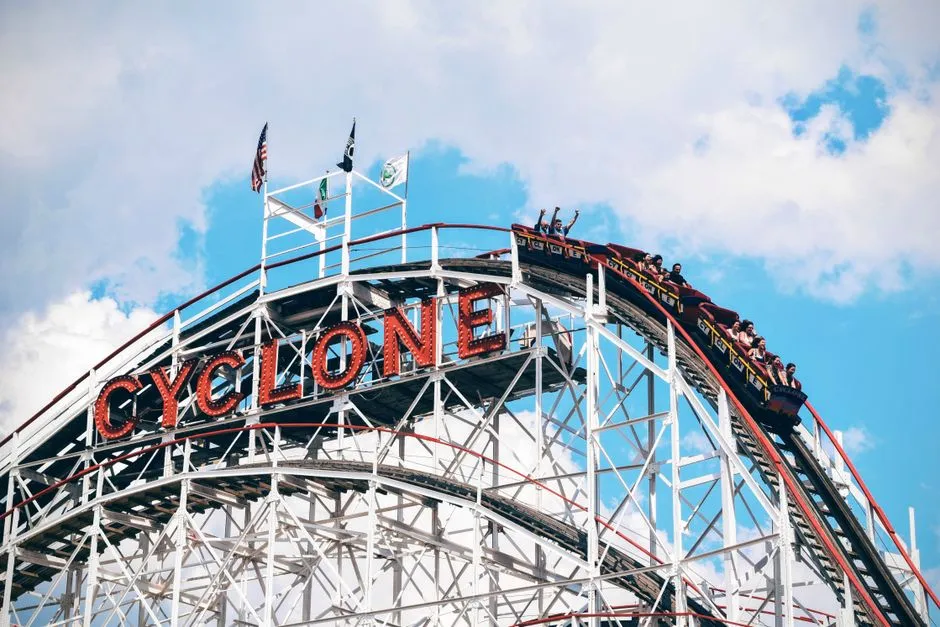
The wood-versus-steel debate has gone on for as long as both materials have shared a midway. Newcomers tend to assume steel is automatically better — newer, smoother, capable of inversions — while veteran enthusiasts often defend wood with the kind of loyalty usually reserved for sports teams. The truth is more interesting and considerably more nuanced.
Steel coasters dominate modern construction for good reasons. Their tubular track allows precise transitions and inversions, manufacturing tolerances are tight, and they hold their geometry season after season. Trains glide rather than jostle, meaning the experience you have on opening day is close to the experience you will have a decade later. The headline coasters at most major parks — hyper coasters, launched coasters, multi-launch giga coasters — are all steel because the medium permits the layouts.
Wood coasters operate on entirely different principles. The rectangular laminated track sits on a wooden support structure that flexes under load. As the train passes, the entire layout breathes; riders feel lateral throws, sudden pops of airtime and the unmistakable thunder of wood on wood. A great wooden coaster delivers sensations that no steel ride attempts to replicate: floater airtime over consecutive hills, sustained laterals through curves, the visceral certainty that you are in a machine and not on a precision rail.
The drawback of wood is maintenance. Wood coasters require constant track work — replacing planks, retensioning bolts, adjusting transitions. A poorly maintained wood ride goes from thrilling to punishing, and ride quality varies meaningfully between trains, seats and even time of day. The same coaster that delivers a perfect ride at 11 a.m. may slap riders around by closing.
Hybrid construction has reshaped the conversation in the past decade. By replacing wooden track with steel rail on top of an existing wood structure, builders such as Rocky Mountain Construction have produced rides that combine the visual silhouette of a classic wooden coaster with the smoothness and inversion capability of modern steel. The result is a category that arguably outperforms both pure wood and pure steel for sheer ride quality, though purists argue the conversion costs the original its soul.
For a first-time rider, the practical guidance is straightforward. Sample at least one well-maintained example of each type before forming an opinion. Sit toward the back of a wood coaster for stronger laterals and airtime, sit in the front of a steel coaster for the visual drama of the first drop. And keep an open mind about hybrids — they are quietly producing some of the best coasters in the country.